
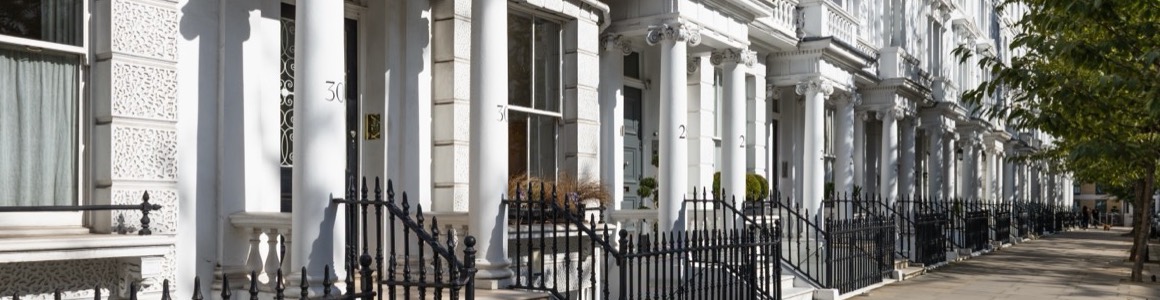
Sash Horns: The Victorian Detail That Dates Your Windows
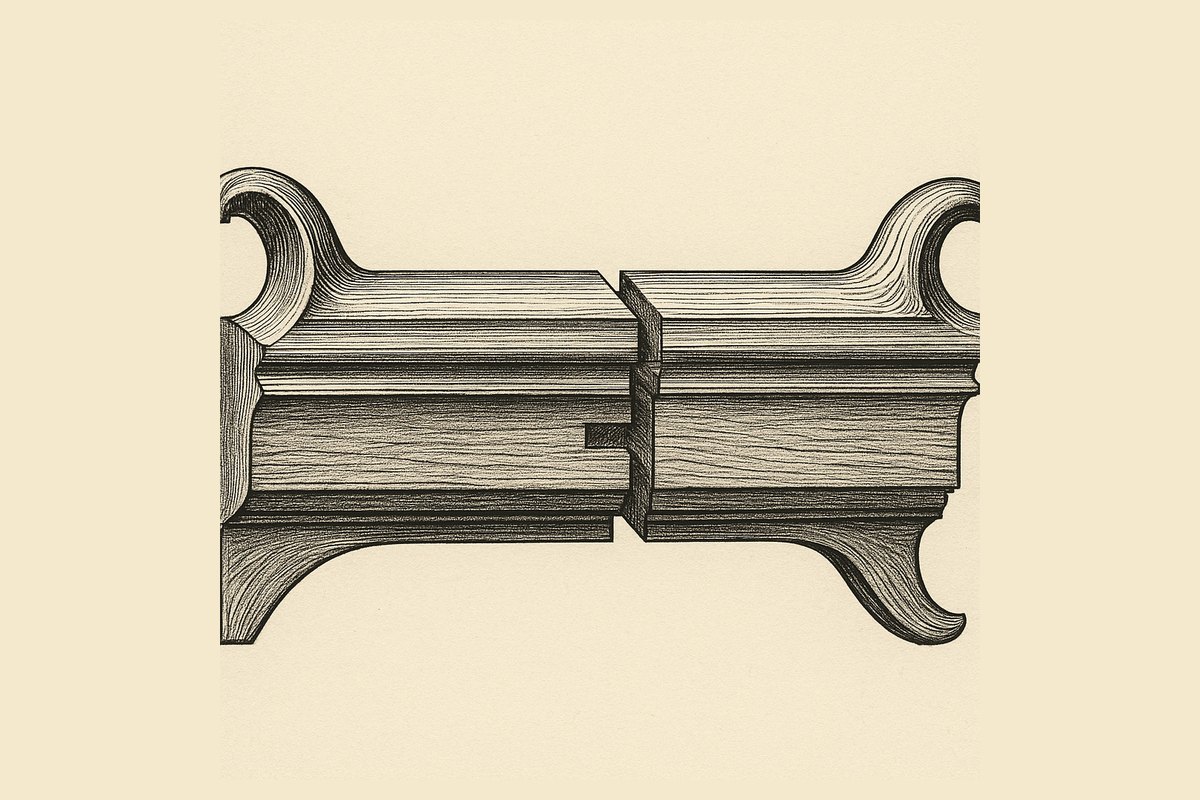
Look at the middle of your window, where the two sashes cross. Two small projections hanging down at either end of the upper sash, like little ears, are the horns. Most people take them for decoration and paint over a split in one for thirty years. They are structural, they are the best single clue to when the sash was made, and a horn that has opened along its grain is telling you the joint behind it is already going.
What a horn actually is
The horn is not a separate piece stuck on the sash. On an original window it is the bottom end of the upper sash's stile, run past the meeting rail instead of being cut off flush with it: the joiner made the stile 50mm to 100mm longer than the frame needed and shaped the end. That is also why horns sit on the upper sash and hardly ever on the lower one, where they would project into the middle of your view. Names vary by yard. Horn, joggle, run-out and lug all mean the same thing.
The joint behind the horn
What the horn protects is the joint where the meeting rail meets the stile. Every member of a sash is joined with a mortise and tenon: the rail cut to a tongue, the stile slotted to take it, the two glued, wedged and sometimes pinned. How strong that joint is depends heavily on how much timber sits beyond the mortise. Cut the stile off flush with the rail and the mortise sits right at the end of the member, with perhaps 15mm or 20mm of short grain holding the tenon in. Load it and that little block of end grain splits off. The joint opens, the sash goes out of square, and it starts binding in the box.
The meeting rail is the worst place on the sash for this, because it is the shallowest member on the window. A bottom rail might be 100mm to 150mm on the face, giving a deep tenon with plenty of glue area; a meeting rail is often only 40mm to 50mm, and a good part of that is cut away again by the bevelled rebate where the two rails cross.
Running the stile past the rail fixes three things at once. There is solid timber below the mortise instead of short grain. There is room to take the tenon straight through the stile and wedge it from the outside face — the through tenon the conservation guidance refers to, far stronger than a stub tenon in glue alone. And the horn gives you a face to pin through.
Why horns arrived in the middle of the nineteenth century
Georgian sashes did not need them, and the reason is the glazing bars. A six-over-six sash is not a rectangle with glass in it. It is a lattice. Each bar is a small strut jointed into the rails and its neighbours, and a grid of them braces the sash against racking the way a diagonal brace stiffens a gate. There is less to carry, too: crown glass in small panes is thin and light.
Two changes in the 1840s pulled the lattice out. The excise duty on glass, charged by weight, had made large panes ruinously expensive; it ended in 1845 and cylinder glass then undercut crown glass, a single blown cylinder eventually reaching a metre and a half. The window tax went in July 1851, and with it the last reason to be careful about how much glass you had. Fashion did the rest: the multi-pane grid gave way to four-over-four, then two-over-two, then the plain one-over-one that fills most of Victorian London.
Take the bars out and you have a four-piece frame carrying a large sheet of glass on four corner joints. Four millimetre glass weighs about 10kg per square metre, so the pane in a ground-floor upper sash is 12kg to 15kg on its own. Local authority conservation guidance sets out the sequence plainly: fewer but larger panes and thinner glazing bars left the sash vulnerable to stress and rot at the corners, and horned sashes with a stronger through tenon joint came in from the mid nineteenth century onwards.
The horn is a direct consequence of cheap glass. It turns up roughly when the problem does, from about 1840, becomes common through the 1860s, and by the 1880s a new sash without horns is the exception. The longer story is in our piece on the history of the sash window.
Dating a sash window: horns are one clue of four
Horns are a hard cut-off in one direction only. A sash with horns was almost certainly made after about 1840. A sash without them tells you less, because plain later windows on back extensions were often made without. The answer comes from reading four things together.
| Period | Typical sash | Glazing bars | Horns | Other tells |
|---|---|---|---|---|
| c.1700–1770 | Six-over-six or larger grid | Thick ovolo, often 25–32mm on the face | None | Box exposed, set back about 4in in London; crown glass |
| c.1770–1830 | Six-over-six, panes larger | Lamb's tongue or ogee, slimmer | None | Box concealed behind the reveal in London; gothic heads late on |
| c.1830–1860 | Four-over-four, two-over-two, margin lights | Thinner again, sometimes only at the margins | Start to appear, short and plain | Cylinder glass, wider panes, heavier sashes |
| c.1860–1900 | One-over-one, two-over-two | Gone, or slender bars in the top sash only | Standard, often long and moulded | Bigger weights, thicker cords, deeper meeting rails |
| c.1900–1930 | One-over-one, or multi-pane top sash | Narrow bars, upper sash only | Standard, shorter and blunter | Wider proportions, drawn sheet glass |
The London Building Acts give a second and more reliable date, because they applied to the building rather than the window. The 1709 Act required sash frames to be set back four inches from the face of the wall; the 1774 Act required the box to be rebated behind the reveal, so only a narrow strip of frame shows from the street. Boxes sitting proud and fully visible are early; boxes half-hidden behind the brick are later. Both rules took about twenty years to spread beyond London.
Then look at the glass. Crown and cylinder glass has ream, a faint rolling distortion that bends the reflection of the gutter opposite as you move your head. Float glass, from the late 1950s, is optically flat and dead. Our guide to matching original cylinder and drawn glass covers identifying what you have before anyone reglazes it.
The commonest mistake in dating London sashes is treating the window as evidence for the house. Plenty of Georgian houses in Islington, Camden and Hackney lost their small-pane sashes in the 1870s and gained horned one-over-ones in the original boxes, because plate glass was the fashion. Date the box from the brickwork and the reveal, and the sash from the sash.
How much does horn shape tell you?
Less than people claim. Horn profiles were house styles: a joinery works in Peckham cut them one way, one in Kilburn another, and both cut the same shape for forty years. What holds is that the earliest horns tend to be short, blunt run-outs, that elaborate ogee and lamb's tongue horns moulded to run out of the sash ovolo belong to the later Victorian decades, and that Edwardian horns are often shorter and squarer again. Treat shape as corroboration, not proof.
Where it earns its keep is within one house. If three windows on an elevation have identical horns and the fourth does not, the fourth has been replaced. The same logic applies to bar profiles, set out in Georgian, Victorian and Edwardian glazing bar patterns.
Original, applied or plastic
Modern windows are sold with horns because the market expects them, so how the horn is made tells you a great deal.
- Look at the grain. An original horn is the end of the stile, so the grain runs continuously into it. On an applied horn the grain usually runs across or at an angle, and there is a glue line you can find with a fingernail, or see as the hairline crack that reappears after every repaint.
- Look at how the paint fails. Water gets into a glue line, the block moves seasonally against the stile, and the paint cracks in a clean straight line at the joint. Original horns crack along the grain instead, usually from the corner of the mortise.
- Tap it. A solid horn sounds like the rest of the stile; a glued block sounds slightly hollow. A uPVC mock horn sounds like plastic and looks it, welded to the outer face only, so the back is flat and the profile stops abruptly. That, and the width of the meeting rail, is what catches out uPVC in conservation areas.
Applied horns are not automatically bad work; splicing a new horn onto a stile that has lost one is a respectable repair. But if all four are glued-on blocks and the timber is bright and knot-free, you are looking at a replacement window whatever the particulars said.
What goes wrong at the horn
Water running down the outside face of the upper sash arrives at the meeting rail and sits in the angle, with the horn's end grain pointing down into it. It is a wet spot by design, which is why the conservation guidance mentions horns and corner rot in the same breath.
Run this check on each upper sash, from inside, with the window closed:
- Press the horn firmly with your thumb. Sound timber does not give. Anything that feels spongy or dents is wet rot, and the difference between wet rot and dry rot matters for what happens next.
- Push a bradawl into the end grain at the bottom of the horn. More than 4mm or 5mm of easy penetration means the timber has gone soft behind an intact paint film, which is how this fault normally hides.
- Look for a dark line across the paint where the horn meets the meeting rail: either a glue line opening or the joint moving.
- Grip the meeting rail and try to rack the sash, pushing one end up and the other down. Any perceptible movement, or a click, means the tenon is loose in its mortise.
- Close the fastener. If the two meeting rails no longer line up, a corner of the sash has dropped. That is a joint problem, not a cord problem.
- Listen near the end of the travel. Where a box has moved, a long horn can catch the staff bead: a bang as the sash comes down and a shiny patch on the bead.
If several of those come back positive on one sash, it is a joinery job rather than a maintenance job, and it gets dearer every winter it is left. Once the joint is open, the timber wets and dries in the middle rather than only at the surface.
Repairing a horn, and what it costs
Small losses at the tip, up to 20mm or 30mm, are a legitimate two-part epoxy repair: cut back to sound timber, consolidate, fill, prime.
Where the rot or the split runs back into the mortise, filler is the wrong answer, because what the joint needs is timber with the grain running the right way. The repair is to cut the stile off on a clean angle above the damage and splice in a new piece, shaped to match and pinned with the new grain running the same way as the old, worked from a template or rubbing taken off the horn at the other end of the sash. It is the technique used on cills and rails, described in our piece on splicing new timber into a rotten frame.
In London, expect roughly £160 to £300 per member for a splice of this kind with the sash out, and less per horn where several are done on one visit, since getting the sash out and back in balanced is most of the labour. If both stiles and the meeting rail have gone, the sums favour a new sash made to match at around £400 to £800, with the original glass reused. The repair worth refusing is a horn screwed and filled back on with no new tenon: it looks right for a season, then the joint carries on working.
Horns and the planners
If your house is listed, replacing a window needs listed building consent, and where a historic window genuinely cannot be repaired the replacement is normally expected to be an exact replica — same design, construction, details and finish, with the old glass reused where possible. Horns are part of that detail, and hornless sashes in a horned Victorian house is the change a conservation officer picks up first, because it reads from the pavement.
In a conservation area, replacing windows is often permitted development, but an Article 4 direction can withdraw that right, usually for elevations facing a highway or open space, and then the detail gets looked at. Our guide to Article 4 directions and what they mean for you explains how to check whether one covers your street. Repairing existing sashes, splicing a horn included, raises none of this.
Where to start
Stand across the road and count the horns along the front of the house. All the same shape and length means the sashes are a set and probably original. One odd window has a different history in it, and usually different timber.
Then do the thumb-and-bradawl check on each upper sash from inside, looking for movement and softness at the joint rather than cosmetic damage. A split horn on an otherwise sound window is a morning's work; the same split left for five winters takes the meeting rail with it.
If the checks turn up soft timber, or you cannot tell an original horn from a glued-on one, we look at these windows across every London borough as part of our sash window repair work, and the answer is more often a splice than a new sash. Original Victorian joinery in Baltic redwood is denser than almost anything you can buy today, which is the real reason to keep it.
We repair and restore timber sash windows across London — see our sash window repair service or request a free estimate.