

Sash Window Draught Excluders: What Works, What Wastes Money
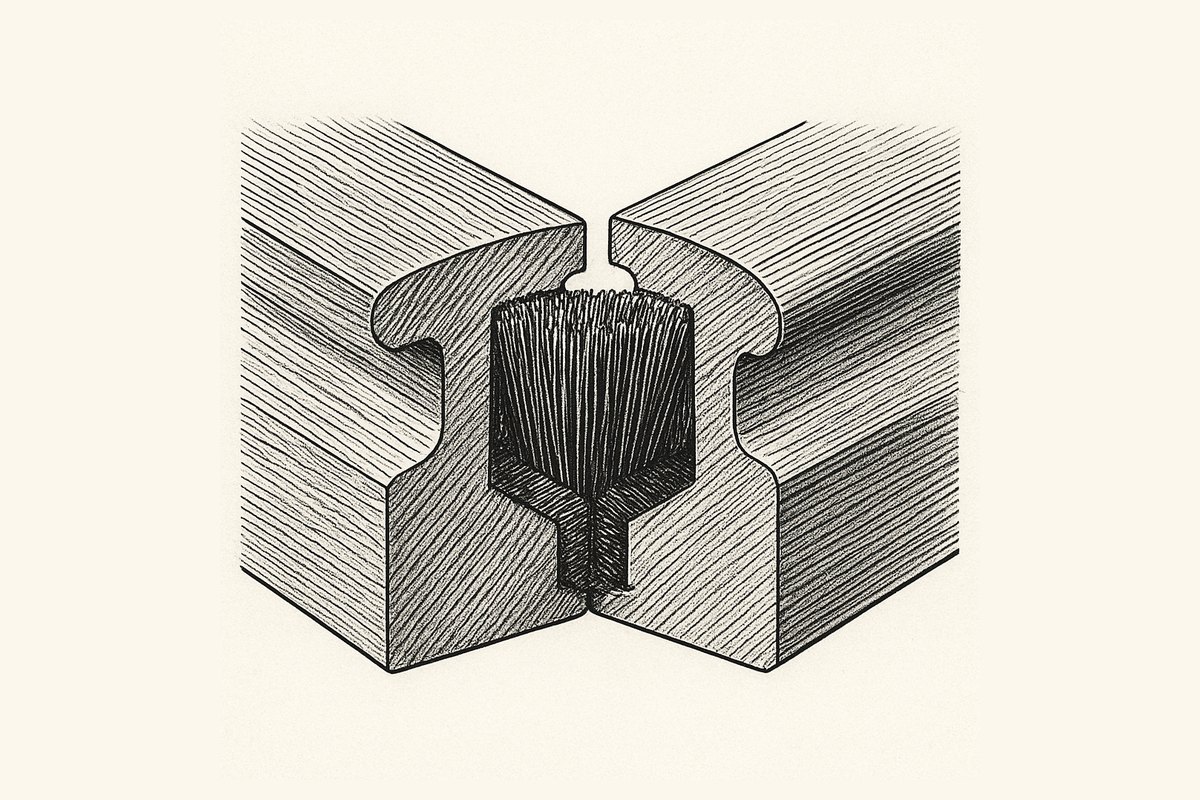
The cold coming off a sash window is not really at the glass. It is a band of moving air across your shins, a second one at chest height where the two sashes cross, and a slow draw at the pulleys that you will only find with a wet hand. What you can buy to stop it runs from a £4 roll of tape to a £400 fitted system, and the difference between them is less about quality than about whether the product suits the particular gap it is being asked to close.
Find the gap before you buy anything
Do this on a windy evening with the heating on, because that is when the pressure difference across the window is biggest. Wet the back of your hand and move it slowly along the joints. A smouldering incense stick shows the same thing more visibly, but the hand is more sensitive than people expect.
Work round in order: up both stiles beside the parting bead, along the meeting rails, across the underside of the bottom rail on the cill, along the top rail against the head, and finally over the face of each pulley stile. That last one is the leak almost everybody misses. Behind the stile is a hollow box holding the weights, open to the outside through the cord slots and often through gaps behind the outer lining as well.
Then measure. A folded strip of card or a feeler gauge slid into the clearance beside the sash tells you what you are specifying, and the number is smaller than most people guess. On a London window built in the 1880s and eased every couple of decades since, it is usually 3mm to 5mm. On a tight one it is under 2mm, and the two stiles of the same sash often differ by a millimetre or more, so check both. Measure the meeting rails with the window shut and the fastener thrown, not with it resting closed. Our guide to finding the worst leak before you spend anything goes through the same survey window by window.
Sliding gaps and closing gaps are different problems
This is the one piece of mechanism that decides everything else.
The clearance beside a sash stile never closes. It is there whether the window is open or shut, because the sash has to travel through it. Anything you put in that gap gets dragged along its whole length, several hundred times a year, and the only thing that survives being dragged is a row of bristles that wipes and springs back. The gap between the two meeting rails is the opposite. It exists only when the window is shut, and it shuts tighter the moment the fastener is thrown. That gap wants squashing, and a squashed seal beats a brushed one for airtightness every time.
That is also why door foam fails here. A door compresses it once against a stop; a sash rubs along it for the full travel of the window.
| Where the air comes in | Typical gap | With the window shut | What seals it |
|---|---|---|---|
| Beside the sash stile, past the parting bead | 2–5mm | Stays open, the sash slides through it | Brush pile, on the sash edge or in a routed bead |
| Between the two meeting rails | 2–6mm | Closes hard on the fastener | Compression gasket |
| Top rail against the head of the frame | 1–4mm | Closes | Compression gasket or a rubber profile |
| Bottom rail on the cill | 1–5mm | Closes | Compression gasket, or a weather bar on a worn cill |
| Cord slots and the box behind the pulley stile | Full slot | Always open | Purpose-made pulley slot covers |
Going through what is on the shelf
Foam tape, around £4 a roll. A door product, and it belongs on a door. On the stiles it collapses where the sash runs, the adhesive shears, and by spring there is a grey ribbon hanging off the pulley stile and a window that needs two hands.
Shrink-fit film, £8 to £15 a window. It stops air moving and adds a still layer in front of the glass, but it also seals the window shut for the winter, goes cloudy, and lifts paint when you take it off in April. For one winter in a rented flat where you may not touch the joinery it is sensible. It is not a repair.
Self-adhesive rubber E and P profiles, £6 to £12. A genuine product, almost always fitted in the wrong place. On a face that closes rather than slides, meaning the top rail against the head or the front face of a meeting rail, they earn their money and last two to four years. Run the same roll up the stiles and the sash binds, somebody leans on it, and either a cord parts or the bottom rail joint opens.
Self-adhesive brush pile, £8 to £20 a window. The best buy at the DIY end, with two conditions attached. Fit it to the edge of the sash rather than to the frame, so it travels with the sash and wipes the stile instead of sitting in one spot collecting grit. And take the timber back to smooth, sound paint first, because adhesive on flaking gloss is why most of these let go in the third month. Pile is sold by bristle height, from about 4mm up to about 12mm, and buying tall because it sounds thorough is the standard error: 8mm of pile in a 2mm gap adds friction up four stiles at once and turns a balanced window into a two-handed one. Our piece on pile heights and the routing they need goes further into both.
Compression gasket at the meeting rails, £3 to £8 a window. Pound for pound the best few pounds in this article. It is the largest single leak on a box sash, it runs the full width of the window at chest height, and it is a gap that genuinely closes, so it can be sealed rather than filtered. The published gap ranges are narrow and they matter. Aquamac 21 is specified for a 4mm to 7.5mm gap; Aquamac 63 sits in the same 2.7mm by 6mm groove but works from 3.4mm to 5.4mm. Choose the wrong one and you either achieve nothing or find the fastener will not pull up to lock.
Pulley slot covers, £6 to £15 a pair. Seal the sliding faces, leave the cord slots open, and you have closed perhaps half the leak while feeling like the job is done. Cold air enters the weight box and warm room air is drawn out of it, all winter.
There is one honest use for the cheapest end of the shelf. If a top sash has been painted shut for forty years and the room has another window that opens, a bead of low-modulus sealant along the meeting rail and up the stiles costs around £8 a tube, seals better than anything above, and lasts a decade. It also converts a sliding sash into a fixed light, so make that decision deliberately rather than discovering it next summer.
What the £250 to £450 fitted price is made of
Almost none of it is materials. Pile comes in coils, gasket by the metre, and new beads cost tens of pounds rather than hundreds. You are paying for access and judgement: the sashes out, paint lines cut without tearing the architrave, grooves routed straight in hundred-year-old softwood, and the window back together sliding with one hand. The spread comes down to size, floor level and access, so a first-floor bay sits at the top of it.
The system itself is no mystery. Brush pile with a rigid backing fin, a shade under 5mm across, driven into a groove routed into the beads. A compression gasket where the meeting rails close. Something purpose-made over the cord slots. There is no adhesive anywhere in it, which is exactly why it lasts fifteen to twenty years rather than three.
Two details separate a good job from an average one, and both belong on the quote in writing. The first is that the parting beads nearly always have to be renewed, because standard bead is only 7mm to 10mm thick and you cannot rout a fin groove into that and leave anything to hold it. The second is that the meeting rails want compression and not brush. Bristles there whistle on a windy night, which is precisely the complaint people bring back two winters after paying for the work. How each family of seal eventually dies is set out in our comparison of brush, woven pile and compression seals.
Be careful with test claims in sales literature. BS 6375-1 is a real standard, but it classifies whole windows and doorsets for air permeability, watertightness and wind resistance. A coil of seal has no class of its own, so if a firm quotes one, ask what was tested and in what window.
Ask about the VAT before you sign. Draught stripping is a listed energy-saving material, and its installation in a home in Great Britain is zero-rated until 31 March 2027, reverting to the 5% reduced rate from 1 April 2027. Secondary glazing and double glazing carry no such relief and are standard-rated at 20%. On an £1,800 job across five windows that is £360 you should not be paying, provided the work is genuinely draught stripping and the invoice reflects it. Materials bought over the counter with no installation are standard-rated either way, which quietly narrows the gap between doing it yourself and having it done.
Sealing a room that has no other way to breathe
Old buildings were leaky by accident, and that accidental ventilation carried moisture out with it. Seal every window in a flat with no working extractor and the moisture from cooking, washing and breathing has nowhere to go. It lands on the coldest surface in the room, which is still the glass, and by the second winter you have the black mould that follows a sealed, unventilated room instead of a draught.
So keep the extractors working and actually use them, leave trickle vents open where they exist, and keep one openable window in service in every room. Where there is an open fire, a stove or any gas appliance, have the draw checked once the work is finished.
Replacing a window makes it a controlled fitting under the Building Regulations, with a U-value to meet and either building control notification or a registered installer. Draught-proofing an existing sash is repair work, not a replacement, so none of that is engaged. The ventilation thinking behind those rules still applies to your house all the same.
When the answer is not a draught excluder
Two things put the whole shopping list on hold.
The first is a window that does not work properly. If a cord has gone, if a sash sits crooked in the box, or if a bradawl pushes into the bottom rail, seals only lock the fault in place, and the sashes have to come out to fit anything permanent anyway. That makes the same visit the cheapest moment you will ever get to have the cords and the balance sorted at the same time.
The second is a gap too big for any bristle. Much over 5mm up the stiles and the fit is wrong rather than the seal, which usually means a worn or missing parting bead, or a sash hanging low on stretched cords. A window that rattles as well as leaking is telling you the same thing from the other end, and a sash that rattles in the wind is worth diagnosing before you buy a roll of anything.
Secondary glazing sits outside the list for a better reason. It seals the whole opening at once, so it deals with the sliding faces, the meeting rails, the cill and the weight box together, and it is the only thing here that makes a serious difference to traffic noise. In London it runs from about £300 to £700 a window fitted, more with acoustic laminate; our breakdown of what a secondary glazing quote is made of is worth reading first. Buy it for noise and take the draught reduction as a bonus. Bought for heat alone, the payback runs into decades.
Be realistic about the money either way. Sealing a house of sashes properly is worth tens of pounds a year on the heating rather than hundreds, and published figures for how much air leakage it removes vary so widely that no single percentage is worth quoting, because the state of the window beforehand decides most of it. What changes reliably is how a room feels at head height on a windy evening.
Do one window and wait for a windy night
Take the worst window in the room you actually sit in, and work in the order the air comes in rather than the order the cold feels worst.
- Meeting rails first, with a compression gasket sized to the gap you measured with the fastener thrown.
- Then the sliding faces, with brush pile on the sash edges, at the bristle height your card or feeler gauge told you and no more.
- Then the cord slots and any gap behind the outer lining, with purpose-made covers rather than tape.
- Then leave it. A fortnight of proper weather tells you more than any product description.
If the room is transformed for £30 of materials, carry on and do the rest yourself over a few weekends. If it is better but the chill at the glass is still there, the problem was never air movement, and no draught excluder is going to touch it. That is a glazing question, not a sealing one.
Where a sash is painted in, where a cord has gone, or where the gaps are wide enough that no bristle will bridge them, the sums stop favouring the roll of pile. Getting sashes out safely is the skilled part of the job, and once they are out the extra cost of a permanent routed system is small, which is how draught-proofing a whole house of sashes is normally priced. Where the joinery underneath turns out to need attention first, that is ordinary work for a firm that repairs box sashes rather than replacing them, and not a second trade on a second visit.
Need this doing? We handle draught-proofing across London — see our sash window repair service or request a free estimate.