
Double Glazing Grants: What's Available for Sash Windows
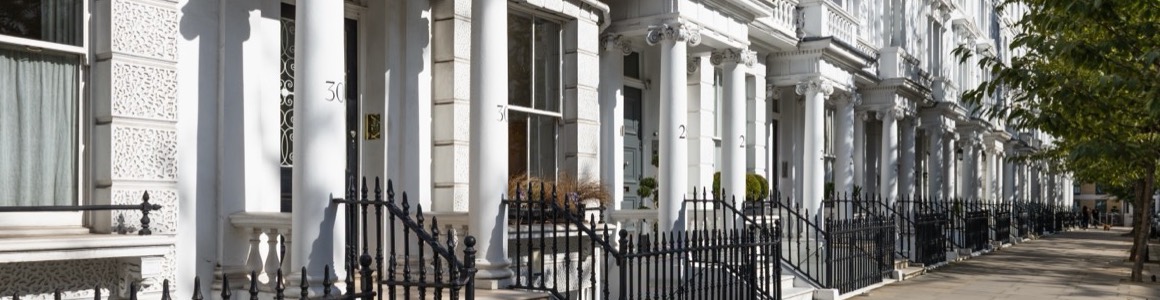
There is no general grant for double glazing in the UK. Nothing lets you prove you own a cold house and collect money towards new windows; what exists is a set of means-tested, locally delivered energy programmes in which glazing appears occasionally, near the back of the queue, and almost never in the form a period property needs. A Victorian terrace in a London conservation area has three gates to pass, and it usually fails one of them for reasons that have nothing to do with how cold it actually is.
Check three things before you go any further
None of these costs anything, and between them they settle most cases in about ten minutes.
- Your EPC band. Look the property up on the national EPC register. Band C or better and nearly every scheme below is closed to you before income is even looked at.
- Household income, or qualifying benefits. Every scheme is means-tested in some form, on an income threshold, on receipt of certain benefits, or on where you live. Local authorities set their own variations on top.
- Whether the property is designated. Listed, or in a conservation area carrying an Article 4 direction. The council's planning pages hold the Article 4 maps, and designation governs what may be done to the windows regardless of who is paying.
Fail on any one of those and grant-funded glazing is effectively out of reach. The VAT relief is not, and it is the one part of this system that reaches an original sash.
The relief that does reach a sash window
Under the energy-saving materials VAT relief, a defined list of measures is zero-rated when installed in residential accommodation, currently through to 31 March 2027. Draught stripping is on that list. HMRC defines it as strips fixed around windows, interior and exterior doors and loft hatches to reduce draughts. Insulation is on the list as well.
Double glazing, secondary glazing and low-emissivity glass are not. HMRC's guidance is explicit that installing other energy-efficient products, including secondary or double glazing and low-emissivity glass, is standard-rated.
The tax system therefore draws exactly the line the grant schemes fail to draw for period property. Sealing an original sash counts as an energy-saving measure and comes at zero per cent VAT when it is installed as part of the work. Putting new glass in it does not. Across a ten-window house that difference alone is worth several hundred pounds, and it is part of why draught-proofing a sash window is the cheapest genuine efficiency measure open to most period homes.
Two things to watch on the paperwork. Ask for the zero rate to appear against the installed measure on the face of the quote rather than disappearing into a single VAT-inclusive total. And note that materials bought on their own, without installation, are standard-rated, so a DIY roll of brush pile does not attract the relief. Our own sash window draught-proofing quotes are written that way as a matter of course.
England: the Warm Homes: Local Grant
This is the main route for private householders in England. It launched on 1 April 2025 and is expected to run until 31 March 2028, funded centrally but delivered by your local council or a regional consortium.
The gov.uk eligibility conditions are:
- The home is in England and privately owned, either by you or by your landlord
- Its Energy Performance Certificate is band D, E, F or G
- Household income is usually £36,000 a year or less, though a higher income may still qualify if you live in a certain postcode area or someone in the household receives particular benefits
You do not receive cash. The council arranges a survey and then arranges the work. There are two cost caps, one for energy performance measures and one for low-carbon heating, each in the region of £15,000 per home averaged across a council's project.
On glazing, be precise about what is promised. The measures named on the government's own page are wall, loft and underfloor insulation, air source heat pumps, smart controls and solar panels. Double and triple glazing sit in the wider eligible-measures guidance as energy performance measures, fundable where they are technically suitable and where the assessment supports them. In practice a retrofit assessor decides, and an assessor looking at a solid-walled Victorian house with a cold loft will put insulation and heating ahead of windows almost every time. Glazing gets funded where windows are single glazed and genuinely failing, and where the cheaper wins have already been taken.
ECO4, and the order in which measures get funded
The Energy Company Obligation is not a government grant but a legal obligation on larger energy suppliers to fund efficiency measures in low-income and vulnerable households. ECO4 was due to end on 31 March 2026 and has been extended by nine months, to 31 December 2026, on the basis of an orderly closure rather than an expansion.
Glazing is an eligible ECO4 measure, single-to-double upgrades included. The complication is that ECO4 is a whole-house scheme, assessed against PAS 2035, working to a required improvement in the property's overall rating. Windows are a secondary measure: they get funded alongside or after primary measures such as loft, cavity or solid wall insulation and heating improvements, because those buy more rating improvement per pound. If your loft is uninsulated, that is what you will be offered.
There is also an ECO4 Flex route, under which local authorities set broader eligibility for households that fall outside the standard benefits test. If you are on a modest income but not on qualifying benefits, that is the door to knock on, and it is your council that holds the key.
What the Great British Insulation Scheme actually covered
GBIS ran alongside ECO and closed on 31 March 2026, with no extension of the kind ECO4 received. It is worth being accurate about its scope, because it is routinely described as a loft-and-cavity scheme and it was considerably broader than that.
The eligible measures were cavity wall insulation including party walls, solid wall insulation internal or external, loft insulation, room-in-roof insulation, pitched roof insulation, flat roof insulation, underfloor insulation, solid floor insulation and park home insulation, with heating controls available as a secondary measure to low-income households. Only one insulation measure could be installed per property, and the work had to go through a TrustMark-registered contractor under PAS 2035.
Windows and glazing appear nowhere on that list, so GBIS was never a route to new sashes. But solid wall insulation was on it, and that is the measure that mattered most in London, where the great majority of Victorian and Georgian stock has no cavity to fill. A scheme aimed squarely at solid-walled houses still did not fund windows, which tells you something about where glazing sits in the official order of priorities.
Scotland, Wales and Northern Ireland
The devolved schemes treat glazing quite differently from one another, and the Scottish position in particular catches people out.
| Nation | Scheme | Position on glazing |
|---|---|---|
| Scotland | Home Energy Scotland Grant and Loan | No grant funding for glazing at all. Available on the interest-free loan side only, up to £8,000 per improvement, and only where the existing window is single glazed |
| Scotland | Warmer Homes Scotland | Does not fund new double glazing, but secondary glazing can be included |
| Wales | Warm Homes Nest | Not on the published list. The Welsh Government's stated offer is a heat pump, insulation and solar panels, plus repair or replacement of a boiler or electric storage heater where the home is left without heating or hot water |
| Northern Ireland | Affordable Warmth Scheme | Explicitly includes replacing single glazing with double glazing, within an overall grant limit |
The Scottish rule is the one to read twice: funding is "only available for improving single glazing, not for replacement or improvement of existing double, triple or secondary glazing". If someone put uPVC into your Edinburgh flat in 1998 and it is now failing, that does not qualify.
Wales gives the shortest answer of the four. Nest is a genuinely useful scheme if you need a heat pump or insulation, and it is free to eligible households, but glazing is not among the measures the Welsh Government publishes. If an installer tells you Nest will pay for windows, ask them to point at the page that says so.
Four reasons grant glazing rarely lands in a period house
Even where a household clears income and EPC band, four things tend to stop it.
Planning comes first. If the property is listed, replacing the windows needs listed building consent, and consent for sealed units in place of original glass is not a given. If it sits in a conservation area with an Article 4 direction, permitted development rights for window changes have been withdrawn and a change of material or detail needs planning permission. Grant schemes are not exempt from planning law. The practicalities are in our guides to what an Article 4 direction means for your windows and listed building consent for windows.
The delivery model does not fit. Scheme work goes through PAS 2030-certified installers working to PAS 2035 assessments, using standard, mass-produced products. That means a uPVC vertical slider off a price list, not a repaired timber box sash carrying a slim retrofit unit. Councils rarely have heritage-capable installers on the framework, and the few who are on it are oversubscribed.
The EPC gate is badly calibrated for old houses. Schemes are gated on band, and EPC methodology treats single glazing harshly while giving almost no credit for repair, draught-proofing or secondary glazing. A well-restored, draught-sealed Georgian house can score worse than a leaky one with plastic windows. Listed buildings can also be exempt from the requirement to hold an EPC in certain circumstances, which helps when selling and hinders when an application asks for a band. Check the individual scheme's position rather than assuming.
The measure hierarchy is against you, and it is right. In a solid-walled house glazing is genuinely not the best pound-for-pound improvement. Loft insulation, floor insulation, draught-proofing and heating controls all come ahead of it, which is precisely why the schemes that did reach London stock were built around wall and roof insulation.
What the doorstep call sounds like
Glazing has attracted doorstep and telephone selling around grant schemes for years, and the pattern is consistent.
- A caller says you have been "approved" or "pre-qualified" for a government window grant. No scheme pre-approves anyone by telephone.
- A quote shows a large "grant" discount off an inflated list price. That is a discount, not a grant.
- A firm offers to handle a "free" EPC and the application on your behalf if you sign a contract on the day.
- Someone claims FENSA or Certass registration makes them a government-approved grant installer. Those are competent-person schemes for building regulations compliance on replacement windows, not grant bodies.
No legitimate scheme pays a grant into your bank account for windows, and no legitimate scheme rings you first. Every real programme runs through your local authority or your energy supplier, is applied for by you, and pays the installer directly.
Apply to your council for the Warm Homes: Local Grant, or approach your own energy supplier about ECO4. Both are free, and neither needs an intermediary.
Where the money goes when it is your own
Most owners of London sash windows will not get funding, and that is less bleak than it sounds, because the measures that work best on a box sash are the cheap ones. They are also the ordinary daily work of a London sash window repair firm, rather than anything specialist.
- Draught-proof the sashes properly. Routed-in brush pile to the sliding faces, a compression seal at the meeting rails, cords and weights overhauled at the same time. Broadly £250 to £450 a window in London, though access, the condition of the joinery and the borough all move it, and the whole measure is zero-rated. It changes how a room feels more than anything else at that price. The options are compared in which draught excluders actually work.
- Use the shutters you already own. Historic Environment Scotland puts the reduction in heat loss through a traditional window at 51 per cent for closed timber shutters, against 63 per cent for secondary glazing. Easing seized shutters back into service costs a fraction of either.
- Price secondary glazing before double glazing. It performs well thermally, better acoustically than a slim sealed unit, and it is reversible, which conservation officers prefer. Realistic figures are in our guide to what secondary glazing costs.
- Only then price glazing itself. If you want sealed units in the original sashes, get the arithmetic straight first with our breakdown of what double glazed sash windows cost.
Do them in that order and the first two are usually enough. If you want one number to judge any quote by, take the cost of the draught-proofing, add the shutter work, and compare it against the glazing figure before you decide the windows are the problem.
We repair and restore timber sash windows across London — see our sash window repair service or request a free estimate.