
Glazing Putty for Sash Windows: Linseed vs Acrylic
The putty along the bottom of your window has cracked into segments, a piece came away when you pressed it, and the pane behind it shifts when a lorry goes past. At the merchant there are two tubs at roughly the same price and a cartridge costing four times as much, and nobody in the queue is going to tell you which one your window wants.
Putty is the cheapest material on a sash window and the one that decides how long the timber lasts. It is the only thing keeping rain out of the glazing rebate. Once it lets go, water stands in the bottom rail and the decay clock starts.
Which of the three materials you are being offered
Three things get sold as glazing putty, and only one of them is putty.
Linseed oil putty is finely ground chalk blended with linseed oil, sometimes with a little added drier. It is the historic material, it is what a conservation officer expects to see on a single-glazed period sash, and it is the cheapest thing on the shelf. The two brands you will meet in a London merchant are Hodgson's Multipurpose Putty and Everbuild 101.
Acrylic glazing compounds are water-based flexible fillers in a tub or cartridge. They skin within hours, take paint the next day, and run neatly in weather that would stall a putty cure. They earn their place on small internal repairs and for bedding beads. They are not a serious external material on a south-facing London sash, because they shrink as the water leaves, and shrinkage at the glass line is exactly where you cannot afford a gap.
MS polymer glazing sealants are the ones that genuinely compete with putty. Repair Care's Dry Seal MP is the one you meet in UK heritage work: a solvent-free, one-component sealant based on a modified silane terminated polymer. Repair Care state that it can be painted or stained after about two hours, that it stays permanently elastic and does not shrink, and that it is moisture and UV resistant, so it can be left unpainted if you prefer. They list it as suitable across glazing types including standard and slim sealed double glazed units, laminated and acoustic glass, and they warrant it for ten years.
| Linseed oil putty | Acrylic compound | MS polymer (e.g. Dry Seal MP) | |
|---|---|---|---|
| Skin outdoors | 2-4 days, weather depending | Hours | Paintable after about 2 hours |
| Painting | Essential, 7-28 days after glazing | Yes, usually next day | Optional |
| Cured state | Hard and rigid | Semi-flexible, shrinks | Permanently elastic, no shrinkage |
| Needs a primed rebate | Yes, always | Yes on bare timber | No |
| Suits sealed units | Not generally | No | Yes, including slim units |
| Conservation work | The expected material | Rarely accepted | Case by case, ask first |
| Life outdoors | 20-30 years on a kept paint cycle | Shortest of the three | Warranted for ten years |
| Material cost per pane | Lowest | Low | Roughly 3-5x putty |
For a single-glazed Georgian or Victorian sash that is staying single glazed, linseed putty is the right answer. MS polymer earns its place on sealed units, on windows you genuinely cannot get back to for a decade, and on jobs where the weather will not give you a putty cure. A fourth tub on the same shelf, metal casement putty, is formulated for primed steel and other non-absorbent frames and stays softer by design. Do not use it on timber, or multipurpose putty on bare steel.
Why linseed putty cures the way it does
Linseed putty does not dry by evaporation, because there is nothing in it to evaporate. It cures by oxidation, the oil reacting slowly with air and stiffening from the outside inwards, over weeks and months rather than hours. Almost every putty failure a joiner is called to follows from that one fact.
Because the binder is oil, bare timber is the enemy. Softwood is thirsty and will pull the oil straight out of a fresh fillet, leaving chalk with nothing holding it together, and within a season or two it crumbles like dry pastry. Both makers say so plainly. Hodgson list the substrate as primed softwood, primed hardwood or primed steel; Everbuild call for timber frames to be sealed with an oil-based primer or two coats of timber sealer before glazing. One coat of solvent-borne wood primer does it. It seals the rebate without stopping the putty gripping.
The second consequence is that paint on a putty fillet is not decoration. It is part of the material. The film keeps ultraviolet off the oil, which would otherwise embrittle it, and it seals the hairline joint where putty meets glass, which is the route water takes when it finally gets in. Unpainted linseed putty on an exposed London elevation is a three-year material. Primed, painted on time and repainted every five to eight years, the same putty on the same window runs twenty to thirty years. You will find older than that on sheltered elevations that have never been out of paint, but twenty to thirty years is the figure to budget around. The material is not the variable. Preparation and the paint cycle are.
What is actually holding the glass in
The pane sits in a rebate, the L-shaped step cut into the inside face of the stile, rail or glazing bar. The glass is not glued in, and the fillet you can see from the street is only the last of four layers.
Underneath the glass there should be a bedding layer, a continuous ribbon about 1-2mm thick that the pane is pressed into until putty squeezes out all round. This is the layer that gets skipped, because once the glass is in, nobody can tell. Skip it and you have a void behind the pane. Voids fill with condensate, condensate sits on bare rebate timber, and the window rots from a face you cannot inspect without taking the glass out.
The pane is then pinned with sprigs, small headless nails tapped in flat against the glass with the side of a chisel, at roughly 150-200mm centres and closer on small panes. Sprigs are not optional. Putty alone will not hold glass through a few thousand slides of the sash.
Only then does the outside fillet go on, knifed to a bevel that throws water clear of the joint. It should finish about 2mm below the sightline rather than flush with it, so that the paint can lap onto the glass and cover the putty-to-glass joint without standing proud. Get that cut line wrong and you have an ugly bead of paint on the glass and an unprotected edge behind it. The whole sequence, from hacking out to the final cut, is set out in our step-by-step re-puttying guide.
The month you start decides more than the brand
Both Hodgson and Everbuild specify application between +5°C and +30°C. Below that the putty goes short and hard, will not knife cleanly, and the cure stalls rather than merely slowing. Both quote a skin forming in roughly two to four days outdoors, dependent on temperature and humidity, and Everbuild's guidance is to overpaint between 7 and 28 days after glazing.
Read those numbers together and the London conclusion is straightforward. Work knifed in June skins in a few days and takes its first coat inside a fortnight. The same work knifed in late October may not skin for three weeks, which leaves no usable dry spell inside the overpainting window, and the fillet then goes through its first winter bare. That is the one thing linseed putty cannot tolerate. If you have any choice at all, put this job between April and September.
Sound putty with hairline cracks in the paint is a decorating job. Putty that has lost its bond to the glass, so a knife slides behind it, is a re-glazing job. Painting over the second one buys you a single winter, and then you pay for the hacking out twice.
The tubs have a short life of their own. Hodgson quote three months' shelf life, Everbuild up to six. Oil separating on top of a part-used tub is normal and should be kneaded back in, not poured off, because that oil is the binder. The order of work for painting a sash matters as much as the puttying once the fillet has skinned, because this is also the point at which a carelessly painted window seizes shut.
Hacking out is where windows get broken
Getting the old fillet off thin old glass is the part of this job that costs people a pane. Original cylinder or drawn glass has that faint waviness and the reflections that ripple as you walk past. It is thinner than modern float, often already stressed by decades of paint build-up, and the hardened putty gripping it can be tougher than the glass itself.
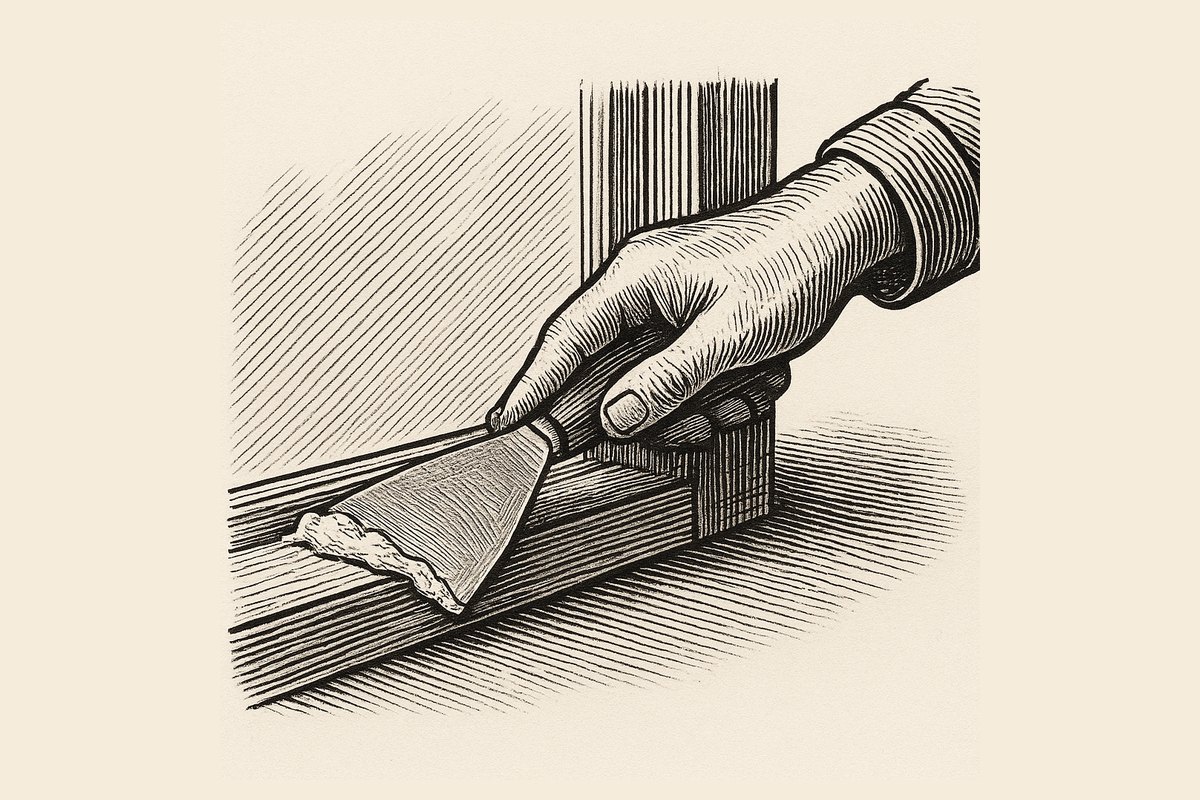
Lever, and you crack it. Cut instead, in short bites along the fillet, and warm anything that will not give. The tool the trade uses on historic glazing is an infra-red putty softener, which works because radiant heat softens the putty while passing through the glass without heating it much. Pull the sprigs with pincers rather than driving a knife into them. Historic England publish a free guide, Traditional Windows: Their Care, Repair and Upgrading, worth reading before you touch anything you cannot replace, and our note on sourcing heritage glass for period sashes covers what is actually available if a pane does go.
One check before you buy any material. If the timber in the rebate is dark, damp and takes a screwdriver point under light pressure, putty is not the problem you have. That is decay, and the timber repair comes first; our guide to spotting wet rot in sash windows covers what to probe for and how far back sound wood usually starts.
Sealed units are a different job with different rules
A double glazed unit is not just a thick pane. It has an edge seal that must not sit in contact with materials that attack it, and its weight has to bear on setting blocks rather than on the glazing bead. Linseed putty over the face of a slim unit is done, and it can look right from the street, but only if the unit has been bedded and blocked correctly underneath, and an MS polymer at the seal is what unit manufacturers generally want. If you are weighing it up, the constraints on slimline unit depths and sightlines are worth reading first, and our double glazing work on existing sashes explains how units go into original rebates.
The rules follow the same repair-versus-replacement line the rest of the trade does. Re-puttying an existing window is maintenance, and nothing in the Building Regulations bites on it. Replacement windows are controlled fittings with a U-value to meet, while a broken or failed pane swapped into an existing frame is treated as a repair rather than a replacement. Going from single glazing to a sealed unit in a listed building or a conservation area is a different question again, decided borough by borough rather than nationally, so ask your conservation officer before ordering glass. An unpainted sealant bead on a principal elevation attracts far more comment than the same product painted out. We have set out what applies when you repair or replace a sash in more detail.
Cost, and the case for leaving it alone
Re-puttying is cheap in materials and expensive in labour, because hacking out is the slow part. Expect a London joiner to charge roughly £45 to £90 a pane for hacking out, re-bedding, pinning, puttying and priming. That falls per pane across a whole window or a whole house and rises sharply where access needs a tower. A six-over-six Georgian window has twelve panes, six in the upper sash and six in the lower, so the arithmetic on a front elevation gets uncomfortable quickly. Access, borough and the timber underneath move these figures most, and nobody can price a fillet they have not seen.
There is a real case for doing nothing. Putty that is hard, sound and painted, with a few hairline cracks in the paint film, is not failing, and chasing every hairline does more harm to the glass and the rebate than the weather was going to. What justifies work is putty that has lost adhesion at the glass, missing sections, a rebate that feels soft through the gap, or a pane that shifts under thumb pressure.
A single pane at ground level, with the sash out on a bench in May and the whole summer ahead of it before paint becomes urgent, is a reasonable thing to take on with a hacking knife and some patience. The same sash in November is not, and neither is any pane of original glass you would struggle to match. Our sash window repair and restoration work covers re-glazing, putty renewal and the timber repairs that usually surface once the old fillet is out, across every London borough.
Before you buy a tub
Five things are worth settling while the tub is still on the shelf.
- Press the rebate timber with a screwdriver point. Soft wood means a joinery repair, and putty laid over it is money thrown away.
- Confirm whether you have single glass or a sealed unit, because that decides the material before anything else does.
- Look at the calendar. If you cannot realistically get paint on within a month of glazing, wait for spring.
- Decide whether the glass is original. If it is, budget for the slow method and accept that you may still lose one.
- Buy what you will use inside three months, and no more.
Then put the repaint in the diary. Five to eight years is the cycle, and it is the whole difference between putty that runs twenty or thirty years and putty that is crumbling in your hand again by the third winter. That diary entry costs nothing and it is cheaper than every alternative to it.
Need this doing? We handle double glazing for sash windows across London — see our sash window repair service or request a free estimate.