
Shutters for Sash Windows: Original Panels vs Modern
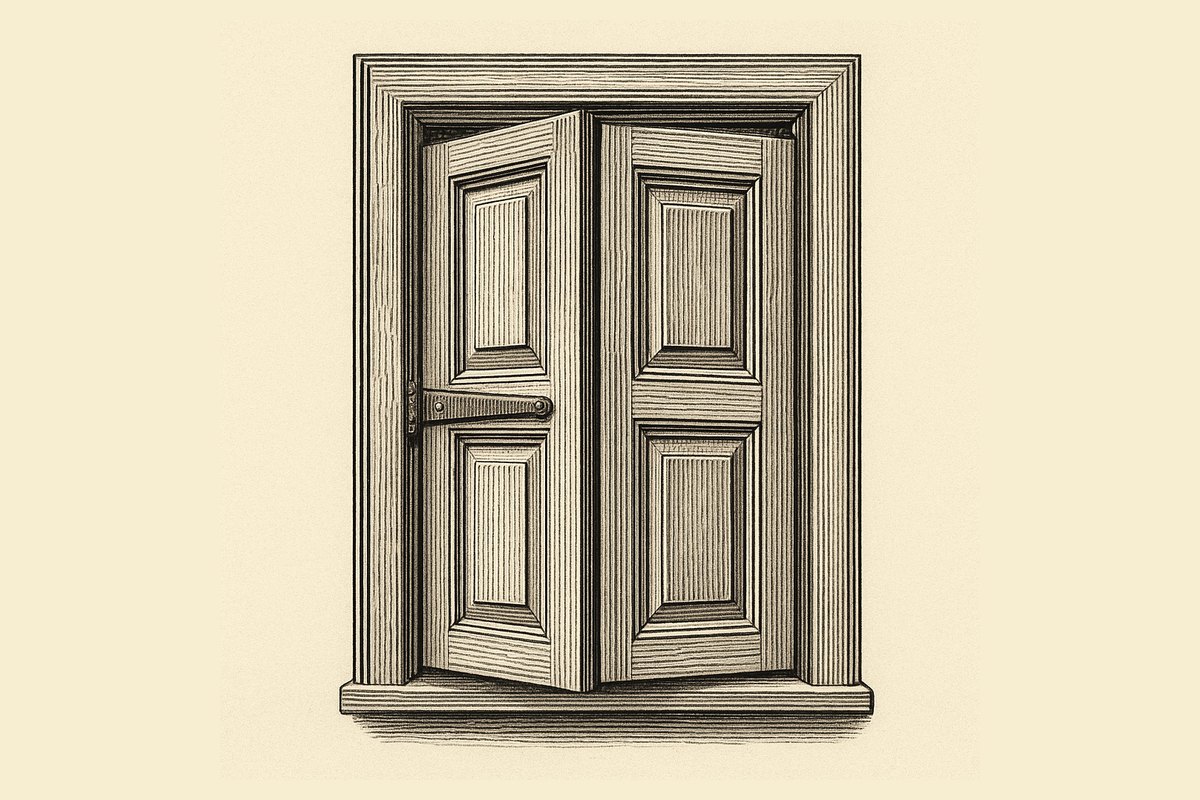
The panelling either side of your window reveal is not decoration. It is a box, and in a great many London houses there are still shutters folded up inside it, painted shut some time around 1954 and forgotten. People spend £2,000 on plantation shutters for a window that already has a better set behind three coats of emulsion. Before you buy anything, find out what you have got.
Six checks that tell you whether yours survive
Work along this list at one window. It takes five minutes.
- Look at the reveal from the side, in raking light. Original shutter boxes have a vertical joint line running the full height where the outermost leaf meets the architrave. Paint softens it but rarely hides it.
- Tap the panelled section of the reveal. A shutter box sounds hollow. A plastered reveal with applied panelling sounds dead.
- Feel for hinge knuckles. Run a finger down that joint at knee, waist and shoulder height. Even under heavy paint you will feel the barrel of an H-hinge or a butt.
- Check the centre of the window, at the meeting rails. Look for a small iron plate, a hasp, or a pair of filled screw holes where a shutter bar sat in its keeps.
- Look at the cill. A narrow slot along the front edge, now painted over, means rising shutters that came up out of a pocket rather than folding leaves.
- Check the soffit above the window. A horizontal joint line up there suggests a shutter that slid sideways into a wall pocket, common where the reveal was too shallow to fold into.
Two or more positives and you have shutters. In terraced London the survival rate is far higher than most owners expect, particularly in first-floor front rooms that have never had a serious decoration.
What the testing actually shows about heat
Shutters look like a decorative survival and behave like insulation, which is worth knowing before you price anything up.
The useful evidence is Historic Scotland's Technical Paper 1. A traditional single-glazed timber sash and case window was put into an environmental chamber at Glasgow Caledonian University, and each dressing was closed over that same window in turn while heat flux sensors on the pane recorded what changed.
| Measure tested, closed | Reduction in heat loss through the glazing | U-value at centre of pane (W/m²K) |
|---|---|---|
| Nothing, bare single glazing | — | 5.4 |
| Heavy curtains | 14% | 3.2 |
| Modern roller blind | 22% | 3.0 |
| Victorian roller blind in the reveal | 28% | 3.2 |
| Thermal honeycomb (cellular) blind | 36% | 2.4 |
| Modern roller blind with low-emissivity film | 45% | 2.2 |
| Panelled timber shutters | 51% | 2.2 |
| Shutters with insulation let into the panels | 60% | 1.6 |
| Secondary glazing | 63% | 1.7 |
| Secondary glazing plus insulated shutters | 77% | 1.0 |
Two rows catch people out. Heavy curtains, which everyone assumes are the warm option, managed 14%, and a plain roller blind beat them at 22%. Curtains feel warm because they raise the surface temperature of the thing you sit next to, not because they stop much heat leaving.
The 60% row is not shutters plus something bought in. It is the same shutters modified in a workshop, with a thin aerogel insulation blanket let into the panels and covered with 6mm plywood. Hidden once the leaves fold away, and entirely reversible, which is why conservation officers tend to look at it kindly.
Read the percentages for what they are. The paper's own clarification note says these U-values were measured at the centre of the glass pane and are not whole-window figures. A whole-window value carries the frame, the box, the cill and every joint along with the glass, so the same shutters always look less dramatic expressed that way. It is also why none of these numbers belong alongside the 1.4 W/m²K a replacement window must meet under Building Regulations, which is a whole-window standard measured a different way. If that distinction is new to you, start with what window U-values actually measure.
What survives the caveats is that working shutters are a free upgrade already sitting in your wall: nothing to run, reversible, no consent needed, and effective every night from October to April. Where that fits into the wider picture is set out in our guide to insulating sash windows.
Shutters only work if they close onto something. A leaf that has dropped 6mm and no longer meets its partner leaves a full-height slot for cold air to fall through. Free them, adjust them, then use them.
What is behind the panelling
Shutters as window closures are far older than glazing. Medieval and Tudor openings were shut with plain boards long before an ordinary house could afford glass in them. What arrives in London around 1670 to 1700, alongside the sash window itself, is the specific thing in your reveal: a panelled leaf hung on hinges and folded back into a purpose-made box in the thickness of the wall. That is joiner's work rather than carpenter's work, which is why almost everything you meet in a London house is Georgian, Regency or early Victorian.
They were made by the joiner who made the window, from the same softwood, Baltic redwood in most of the capital's stock, and framed exactly as a door is, with stiles, rails and panels.
The commonest arrangement is a folding set: two panelled leaves per side, hinged to each other and to the window frame, folding into a box formed by the elbow lining below and the back lining behind. Wide windows get three leaves a side, and the innermost is often a plain plank, because with the shutters open it is buried in the box and nobody sees it. That plain leaf is not a bodge. It is original economy.
Panel treatment dates them fairly reliably. Raised and fielded panels with a bolection or ovolo moulding point to the eighteenth century; flat recessed or flush panels with a simple bead to the early nineteenth. By the 1840s the mouldings are heavier and the panels squarer, in step with the changes you see in Victorian sash windows generally. Fashion moved away from shutters through the middle of the century, though speculative terraces kept fitting them into the 1860s as cheap security.
Less common but worth knowing:
- Rising or sash shutters, sliding up out of a pocket in the cill and held with a pin or a catch. Common in early Georgian work and in basements.
- Horizontal sliding shutters, running out of a pocket in the wall thickness.
- Split or tier shutters, divided at the meeting rail so the lower half closes for privacy while the upper stays open for light.
Keep the ironmongery. Early sets have decorative H-hinges or butterfly hinges; later ones plain H-hinges or ordinary butts. The bar across the middle drops into iron keeps and was the actual security. In sound keeps it will resist a shoulder better than most modern window catches, which is worth remembering on a ground floor.
Freeing a set that has been painted shut
Three failures account for almost all of it.
Paint. Decades of coats bridge every joint. The leaves are glued into the box and the hinge knuckles are solid with it.
Dropped hinges. The outer leaf carries the whole folded assembly through its hinge screws into the window frame. Those screws work loose, the leaf sags, the bottom corner binds on the cill, and someone forces it. Once the holes have stripped, tightening does nothing.
Timber that has moved. A leaf that has spent seventy years open in a dry room shrinks. One behind a radiator in a damp reveal swells. Either way it no longer fits the box it was cut for.
Freeing a set properly runs like this.
- Score every paint line with a sharp knife: leaf to leaf, leaf to architrave, and around each hinge knuckle. Cut, do not tear.
- Work a thin chisel or plastic wedge into the joint at mid-height, never at a corner, levering against a scrap block so you bruise the block rather than the moulding.
- As soon as the leaf breaks free, stop. Clear the knuckles with a bradawl before you swing anything, or a seized knuckle will pull the screws out of the stile.
- Check every hinge screw. Where a hole has stripped, plug it with a glued hardwood dowel, let it cure and re-drill. Longer screws into soft old pine is temporary at best.
- Strip only the meeting edges and the knuckles unless the whole room is being decorated. Paint on a shutter is often the only original surface left.
- Lubricate the knuckles with candle wax or graphite. Not oil, which holds dust and bleeds through paint.
- Re-hang, close them, and look at the daylight along the meeting edges. Ease with a plane until they shut without force.
A joiner will spend the best part of a day on the first window's set, and less on the second and third once the pattern of the house is understood. It is patient work more than specialist work, and any firm handling sash window repairs across London should take it on alongside the cords and beads. If the room is being decorated at the same time, the order of work when painting sashes matters: shutters get painted with the leaves open and the knuckles masked, never closed.
Where leaves are missing, a joiner can copy the survivors. Missing back and elbow linings are harder, because the box has usually been plastered over and reinstating it means opening the reveal.
Where plantation shutters genuinely fit
What the shutter industry sells today is a different product with the same name. Plantation shutters are louvred panels, moveable slats in a frame, usually MDF with a wrapped or sprayed finish, or a light hardwood such as basswood or paulownia, hung in their own frame fixed into or over the reveal.
They are good at things original shutters are not. Louvres give graduated light and privacy at once, which a solid panel cannot, and they suit rooms you want dressed all day rather than shut at night. On a house that lost its originals decades ago they are a reasonable answer.
They are weaker on heat, and the mechanism is plain once you look at a closed one. A louvred panel is a stack of overlapping slats with a tilt rod through it. Air moves through the slat joints and around the rod even with the louvres shut, so it cannot hold a still layer of air against the glass the way a solid leaf does. The chamber programme above did not include louvred shutters at all, so a percentage quoted in a showroom has come from somewhere else, on a different window, and will not line up against that table. Louvres are also wrong on a Georgian front elevation, where louvred shutters were essentially never used internally in this country.
| Original panelled shutters | Modern plantation shutters | Solid-panel modern shutters | |
|---|---|---|---|
| Material | Softwood, painted | MDF or light hardwood | MDF or hardwood |
| Light control | Open or shut | Graduated, louvred | Open or shut |
| Still air held against the glass | Best of the three | Poorest, air moves through the slat joints | Good, if well fitted |
| Period correctness | Correct by definition | Wrong for pre-1840 interiors | Acceptable if profiles are right |
| Typical cost per window | £400 to £1,200 to restore | £120 to £280 MDF, £300 to £600 hardwood | £350 to £900 |
| Reversible | Already there | Depends on fixing | Depends on fixing |
| Consent in a listed building | None to repair | Needed | Needed |
Those modern prices are for a standard window, fitted, and they move with access, storey and borough. Café style, lower half only, runs 30 to 40% below full height. Tier-on-tier costs most, being two sets of frames.
Fitting new shutters without wrecking the joinery
The fitter needs somewhere to screw a frame, and the tempting places are the architrave and the window frame itself. Both are original fabric. Insist on an L-frame or Z-frame fixed into the plaster reveal, or a face-fit frame landing on the wall outside the architrave. Ask where the screws are going before the survey ends, and get the answer written on the order.
You also need depth. Recess-mounted shutters want 60mm to 100mm of clear reveal in front of the sash, and a London reveal often has less once the architrave is counted. If the fitter proposes planing the architrave or stripping out the shutter box panelling to make room, walk away.
Then watch the interaction with the window. A frame fixed across the reveal can foul the sash lifts, block the Fitch fastener, or make the bottom sash impossible to open for cleaning. It can also trap moist air against cold glass, turning mild condensation into a mould problem, which is the same trap that catches people fitting blinds to sash windows.
Listed buildings, conservation areas and consent
Original shutters are protected fabric in a listed building exactly as the windows are. Removing them, blocking the boxes, or fixing a modern shutter frame through the architrave are alterations likely to need listed building consent, and conservation officers take shutters seriously because so many have been lost. Repairing them like for like does not, and copying a missing leaf from the survivors is generally regarded as exemplary work.
In a conservation area the shutters themselves are internal, and the designation controls external appearance rather than what you do inside. Anything visible from the street is a different matter: external shutters, or a fitting that alters the window opening, may need permission. How strictly that is read varies between boroughs, so a call to the conservation team before you order is ten minutes well spent.
Before you order anything
Go round the house tonight with a torch and run every reveal past the six checks. Count the sets you actually have.
If they are there, get them freed and working before you spend a penny on window dressing. It is a day or two of a joiner's time and it changes a cold room in a way no blind does. If what comes out from behind the paint is split leaves and stripped screw holes, that is joinery rather than a shutter purchase, and it belongs with the rest of your sash window restoration.
If the originals are genuinely gone and the house is not listed, solid-panel shutters made to a period profile sit far better on a sash window than louvres, and they hold heat better as well. Louvres are a light-control product. Buy them for that, and do not let anyone sell them to you as insulation.
We repair and restore timber sash windows across London — see our sash window repair service or request a free estimate.